Mostrando entradas con la etiqueta science. Mostrar todas las entradas

domingo, 8 de marzo de 2015

LIVING BEINGS.


Look around you. What do you see? A classmate, a brother or sister? Look out the window, or go for a walk. You will see trees, grass, plants, dogs, cats, bugs, and many other forms of life. 

Now, think about this. Life extends much further than what you can see. Everywhere around you, all over your keyboard, the computer monitor, your desk, the walls, the floor, the ceiling, your clothes, and even your skin, you can find billions and billions of tiny microscopic lifeforms.  
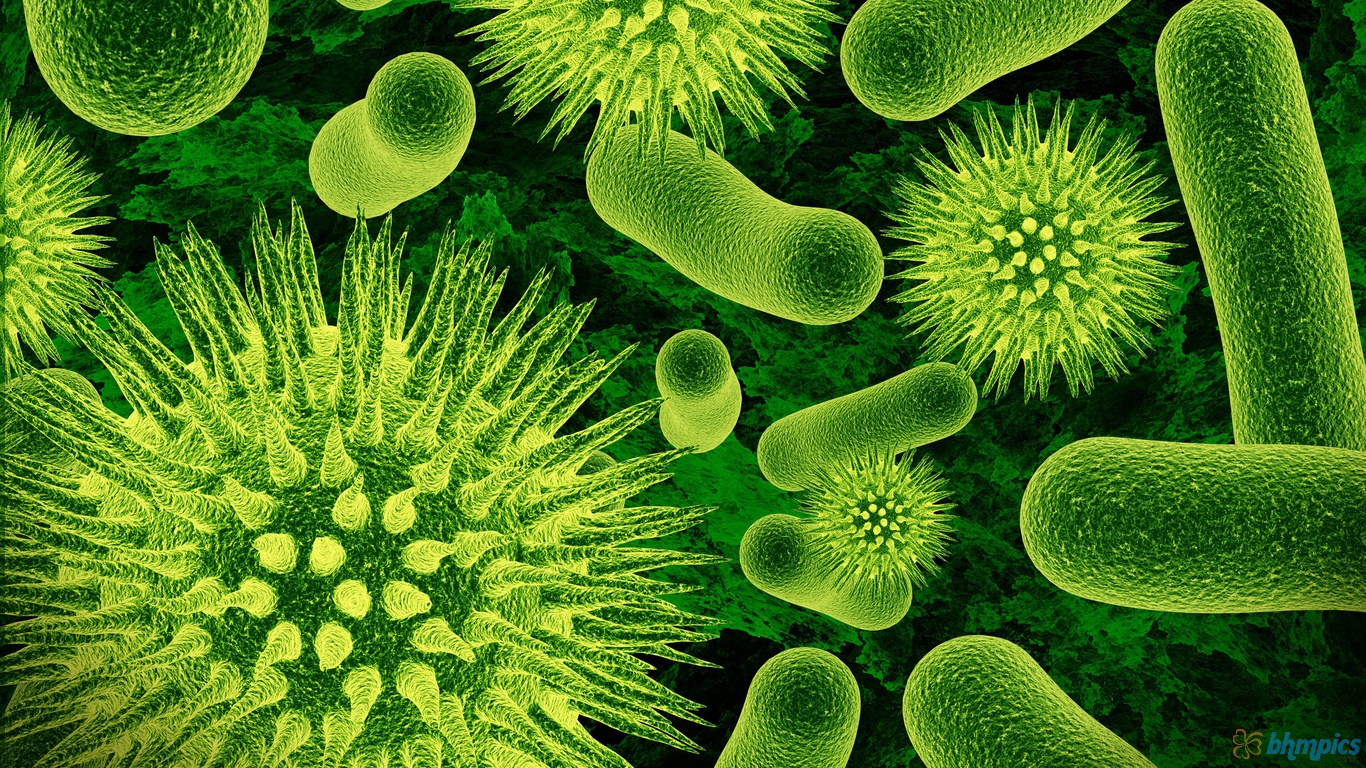


Life is all around us. From many kilometers (miles) into the atmosphere, to many meters (feet) beneath the surface of the Earth, life is everywhere. What is this stuff we call life? What are some things that all life forms have in common?


Living Things Are Made of Cell.

All living things are made up of cells. These cells are the basic building blocks of life. As an example, have you ever seen a sandcastle? At a distance, the sandcastle looks like a smooth brown building. As you get closer to the sandcastle, you can begin to see that it is not one smooth building, but instead that it is made up of millions of tiny grains of sand.

Looking at an elephant, you might see what looks like a smooth gray animal. And it is true that this is what you are seeing. However, just like the sandcastle, if you could get close enough, and if your eyes were powerful enough, you would realize that what looks like a smooth gray surface, is really made up of many billions of smaller objects called cells. 

Cells are tiny units of living materials separated by a cellular wall, or barrier. These cells are so small, that they can only be seen with a powerful tool known as a microscope. Cells make up every part of a living thing. Your skin, your hair, fingernails, blood, bones, nerves, and muscles are all made up of cells. These cells work together to keep the lifeform alive.  

Many lifeforms can move. 

Just like you, they might move to find food, to find shelter, to avoid danger, or in response to their environment. Animals move in many different ways. They might use fins to push them through the water, wings to help them fly, paws and tails to help them move on land.


Plants also move. They of course cannot move as well as animals, but many plants move their stems to face the Sun, open and close flowers, and more. Some carnivorous plants even move to trap prey.  


Living Things Grow.


What would you like to be when you grow up? Well, first you must eat a lot of food and get your rest. These things are necessary for your body to grow. Like you, other living things also grow. Almost all living things start their lives as smaller infant-like creatures. Over a period of time, they grow and develop into adults. Some lifeforms, such as frogs, start their life in a completely different form, and then change dramatically as they grow. A frog begins its life as a tadpole, then turns into an adult frog. A butterfly starts its life as a caterpillar before maturing into a full grown beautiful butterfly.
Living Things Reproduce.

A very important part of the life of living things is the ability and opportunity to reproduce, to create offspring. Reproduction is the process of one or more living things creating another living thing. Your parents created you. A mother and father dog reproduce, creating puppies. By reproducing, living things are able to pass on their characteristics to another generation.
Living Things Die.

Something that is definitely unique to living things is that they die.
Anything that is alive will eventually die. The period of time that something is expected to live is called the living thing‘s “lifespan.” The lifespan of living things can vary significantly.
Classification of living things.


Classification of living things.


What are germs?


Bacterias.


Need of living things.


GAMES.


sábado, 14 de febrero de 2015

lunes, 8 de diciembre de 2014

WEATHER AND CLIMATE.

What is climate?
 
Climate is the average weather usually taken over a 30-year time period for a particular region and time period. Climate is not the same as weather, but rather, it is the average pattern of weather for a particular region. Weather describes the short-term state of the atmosphere. 

Climate is a country’s normal weather over a long period of time.  By climate we mean a country’s rain and sunshine, winds, storms and everything else that makes up the weather. 

The weather changes from day to day and even from hour to hour.  It can be sunny in the morning and cold and wet in the afternoon.  The climate changes very slowly over thousands of years. 

We know that the Equator means heat and the Arctic means cold.  Climates are also affected by how close a country is to the sea and by how high a country is. 


What is weather?
The weather is just the state of the atmosphere at any time, including things such as temperature, precipitation, air pressure and cloud cover. Daily changes in the weather are due to winds and storms. Seasonal changes are due to the Earth revolving around the sun.


 There is one basic reason we have weather, and that is the sun. Weather systems start because the sun’s energy heats up some parts of Earth more than others. Most of the time the sun shines most directly on the middle of Earth, with less heating at the north and south poles. Earth is tilted on its axis at exactly the right angle to have seasons, with different parts of Earth being heated more or less during different times of the year. Land heats up faster than water, wetting up temperature differences between oceans and continents. This unequal heating creates variations in temperature and air pressure, winds, and ocean currents.
 

What causes weather?
 
Because the Earth is round and not flat, the Sun's rays don't fall evenly on the land and oceans. The Sun shines more directly near the equator bringing these areas more warmth. However, the polar regions are at such an angle to the Sun that they get little or no sunlight during the winter, causing colder temperatures. These differences in temperature create a restless movement of air and water in great swirling currents to distribute heat energy from the Sun across the planet. When air in one region is warmer than the surrounding air, it becomes less dense and begins to rise, drawing more air in underneath. Elsewhere, cooler denser air sinks, pushing air outward to flow along the surface and complete the cycle.


SEASONS.

We divide up the year into four seasons: spring, summer, autumn, and winter. Each season lasts 3 months with summer being the warmest season, winter being the coldest, and spring and autumn lying in between.

The seasons have a lot of impact on what happens on the earth. In the spring, animals are born and plants come back to life. Summer is hot and is when kids are usually out of school and we take vacations to the beach. Often crops are harvested at the end of the summer. In autumn the leaves change colors and fall off the trees and school starts again. Winter is cold and it snows in many places. Some animals, like bears, hibernate in the winter while other animals, like birds, migrate to warmer climates.

Seasons are caused because of the Earth's changing relationship to the Sun. The Earth travels around the Sun, called an orbit, once a year or every 365 days. As the Earth orbits the Sun the amount of sunlight each place on the planet gets every day changes slightly. This change causes the seasons.


INTERESTING WEBS.


GAMES.


Seasons

viernes, 7 de noviembre de 2014

REPRODUCTIVE SYSTEM.

All animals need to reproduce to keep their kind going. But how does it happen in us, humans?
The reproductive system is responsible for the creation of new life. Humans have sexual reproduction. This means that a male and female come together to form a new baby. 

The reproductive system includes the organs that work together for the purpose of reproduction.
As we grow up, our body starts to change and our reproductive organs develop.
Men and women have different reproductive systems.
These two reproductive systems need to work together so that we can reproduce.


THE MALE REPRODUCTIVE SYSTEM.

The male reproductive organs are on the inside and the outside of the body.
The testicles store and produce sperm. The testicles are locates in a bag called scrotum.
The penis is connected to the testicles by small tubes.
The urethra is a tube in the penis.
Sperm travels through the urethra to the outside of the body.

THE FEMALE REPRODUCTIVE SYSTEM.

The female reproductive organs are mostly inside the body.
The ovaries store and produce eggs.
The uterus is connected to the ovaries by tubes.
The vagina is a muscular tube and connects the uterus to the outside of the body.
The vulva is on the outside of the body and covers the opening of the vagina.

HOW WE BORN??


Reproduction begins with fertilisation and ends with birth. A human pregnancy lasts nine months. The umbilical cord transports nutrients from the mother to the foetus.
1. Fertilisation: a sperm joins an egg.

 In the first three months…
2. The embryo is about the size of a small seed.
3. The embryo becomes a foetus. The foetus is about the size of a bean.
4. Limbs start to grow and organs start to develop.

 In the second three months…
 5. The face starts to form.
6. The foetus has all its organs and it continues to grow.

 In the last three months…
 7. The foetus is developed and preparing to be born.

Birth
  8. The baby leaves the uterus and is born.


miércoles, 15 de octubre de 2014

MY BODY.

PARTS OF THE BODY.

Now we'll explore the human body by knowing the different parts of the body.


Do you know the parts of your face? It´s very easy!!


Let´s play!!!

http://www.anglomaniacy.pl/bodyMatching.htm

http://www.eslgamesplus.com/body-parts-board-game-for-esl-practice/

http://www.turtlediary.com/kindergarten-games/science-games/body-parts.html


Sing a body song!!!


BONES.

Every single person has a skeleton made up of many bones. These bones give your body structure, let you move in many ways, protect your internal organs, and more.


MY SENSES.


THE RESPIRATORY SYSTEM.

THE RESPIRATORY SYSTEM

The job of your respiratory system is very simple: To bring oxygen into your body, and remove the carbon dioxide from your body. Your body needs oxygen to survive. 
The main organs in your respiratory system are your lungs.
We breathe in using a muscle called the diaphragm. 
When we breathe in, air gets forced through our nose or mouth, down our windpipe, and into bronchi tubes in our lungs. These bronchi tubes branch out and get smaller and smaller, like the roots or branches of a tree.
At the end of the smallest branches of the bronchi are tiny air sacs called alveoli. These air sacs have a very thin, one cell thick wall that allows oxygen to be passed to red blood cells as they are passing by.  
The alveoli don't just pass oxygen to our blood, they also help to clean out waste gas from our blood cells. This waste gas is carbon dioxide. When we need to breathe the carbon dioxide out of our lungs, the diaphragm bows up and pushes the air back out, getting rid of the carbon dioxide. This makes room for fresh air with new oxygen to come back in on our next breath. 


martes, 14 de octubre de 2014

THE CIRCULATORY SYSTEM.


THE CIRCULATORY SYSTEM AND THE HEART.

  • The circulatory system is composed of the heart and blood vessels, including arteries, veins and capillaries.
  • The circulatory system moves blood through the heart and around our body.
  • The blood gives our body the oxygen and nutrients it needs.
  • Blood also carries waste and carbon dioxide that we need to eliminate from our body.
  • Types of blood vessels:

    Arteries: carry blood and nutrients from the heart to all parts of our body.
    Veins: carry blood back to the heart  from the rest of our body.
    Capillaries: are very small vessels that connect our arteries and veins.


THE HEART.


Your heart is really a muscle. It's located a little to the left of the middle of your chest, and it's about the size of your fist.


But the heart muscle is special because of what it does. The heart sends blood around your body. The blood provides your body with the oxygen and nutrients it needs.

It also carries away waste.


The right side of your heart receives blood from the body and pumps it to the lungs. The left side of the heart does the exact opposite: It receives blood from the lungs and pumps it out to the body.


jueves, 2 de octubre de 2014

DYGESTIVE SYSTEM

Digestive system is one of the most interesting systems in the body to learn about.
Digestion is an important body process where the food we eat, gets converted into substances which can be absorbed by the body. Many different organs together form the digestive system, these organs work together to digest the food.

miércoles, 1 de octubre de 2014

HEALTHY LIFE.


Healthy Lifestyles.

Sleep.

To function properly, your body and mind need from eight to ten hours of sleep each night: have a routine for going to bed and close the blinds or curtains before you go to bed and minimize any light sources in the bedroom.

Diet.

Eat a well balanced diet: drink plenty of water, eat a balance of meat/protein, whole grains, fruit and vegetables daily, don't skip breakfast (Eat something for breakfast everyday), eat regular meals.


Physical Activity.

Exercising regularly is part of having a healthy lifestyle. Physical activity helps build a strong body and mind.


Play.

Another important part of having a healthy lifestyle is remembering to "play". Just taking time to laugh, have fun and being around people who make you feel good is part of having balance in your life.